What Is a Weather Station, Really?
A weather station is any system designed to measure atmospheric conditions at a specific location. That definition is deliberately broad, because weather stations come in radically different shapes — from a $40 consumer gadget on your garden fence to a $2 million automatic observation system sitting on a buoy in the middle of the South Atlantic.
What they share is a purpose: capturing the state of the atmosphere at a given point in time and space. The variables they measure — temperature, pressure, humidity, wind, precipitation, solar radiation — are the raw inputs that meteorologists feed into numerical weather prediction models. Without observation data, those models are blind.
The earliest weather stations were nothing more than a thermometer and a barometer in a box. The first systematic network was established in the mid-1600s by the Medici court in Florence, using standardized instruments and trained observers at multiple locations. It was, by any measure, a remarkable scientific achievement for the era.
Today, the World Meteorological Organization coordinates a network of over 10,000 land-based surface stations, supplemented by thousands of buoys, radiosondes, aircraft sensors, and increasingly, satellites. Every observation feeds into a shared global database, because weather doesn't respect national borders and neither does data.
The Core Instruments Inside a Weather Station
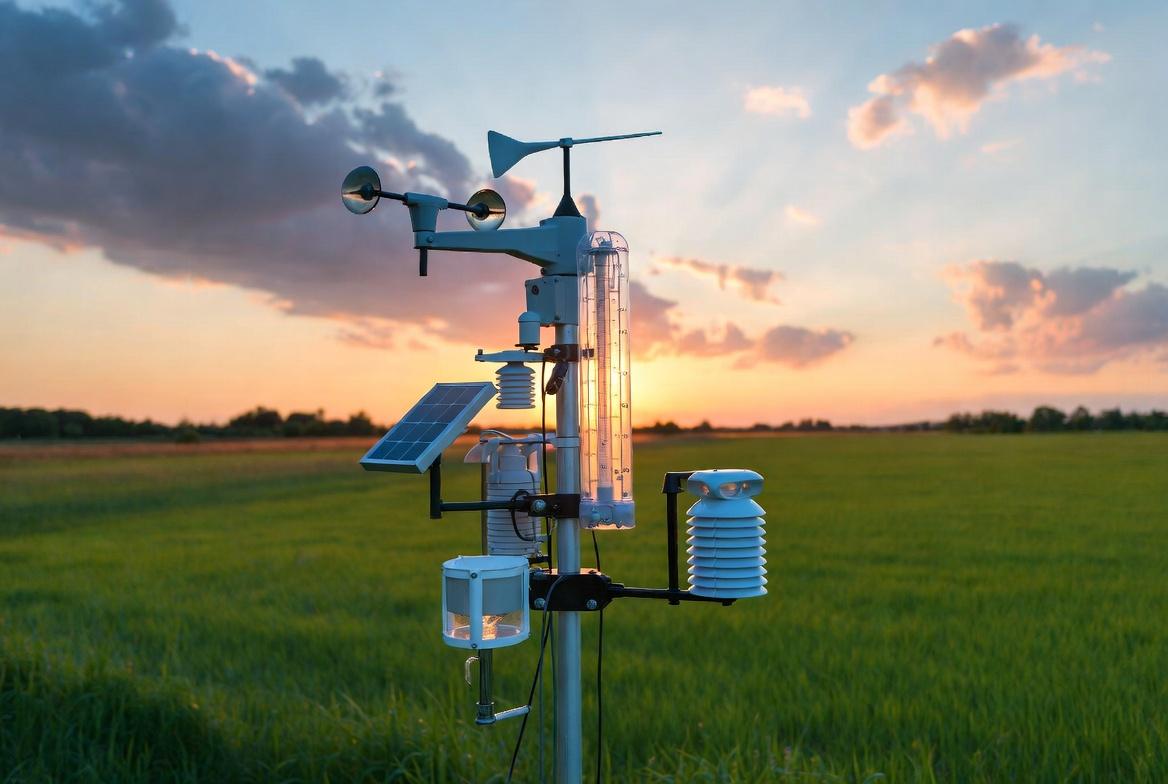
Every weather station — consumer or professional — is essentially a collection of sensors. Understanding what each sensor does helps you evaluate any station, from a basic home unit to a full professional installation.
The Thermometer and Temperature Sensor
Modern weather stations use electronic resistance temperature detectors or thermistors rather than mercury columns. These measure air temperature by detecting how electrical resistance changes with heat. The critical issue isn't the sensor itself — it's where you put it.
Temperature sensors must be housed in a radiation shield: a louvred white enclosure that allows air to circulate while blocking direct sunlight. Without one, a sensor can read 10–15°C higher than actual air temperature on a clear day. The Stevenson screen, the iconic white slatted box used at official meteorological stations, was designed specifically to solve this problem and has been the international standard since the 19th century.
The Barometer and Pressure Sensor
Atmospheric pressure is the weight of the air column above you pressing down. It falls before storms and rises as they clear, making it one of the most diagnostically useful measurements in meteorology.
Modern stations use aneroid or digital pressure sensors. Consumer stations typically measure in hectopascals (hPa) or millibars — they're the same unit. A standard pressure at sea level is 1013.25 hPa. Readings below 1000 hPa generally signal unsettled weather; above 1020 hPa, you're usually looking at settled, anticyclonic conditions.
High-quality pressure sensors can detect changes of less than 0.1 hPa, which makes them sensitive enough to track the approach of a front many hours before it arrives.
The Hygrometer and Humidity Sensor
Relative humidity — the percentage of water vapour in the air relative to how much it could hold at that temperature — matters for comfort, agriculture, building management, and aviation. Modern sensors use capacitive technology, measuring how water vapour changes the electrical properties of a thin polymer film.
Humidity sensors degrade over time, particularly in environments with high pollution or salt air. Many professional stations replace humidity sensors on an annual maintenance cycle.
The Anemometer and Wind Vane
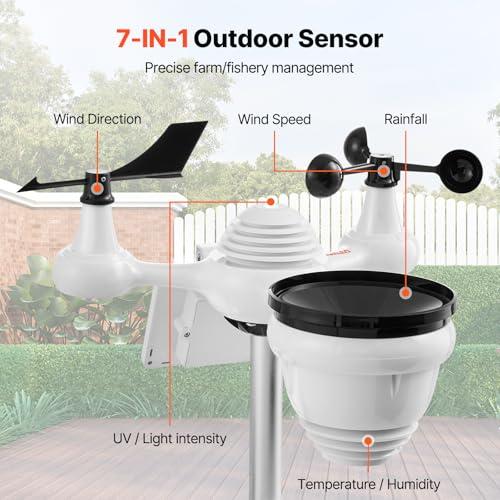
Wind speed and direction are typically measured by two separate instruments. The classic cup anemometer uses three or four hemispherical cups on a rotating arm — the faster they spin, the higher the wind speed. The wind vane is a fin that aligns itself with the wind direction, transmitting its angle as an electrical signal.
Ultrasonic anemometers, increasingly common in professional and premium consumer stations, have no moving parts. They measure the time it takes for sound pulses to travel between paired transducers and calculate wind speed from the difference. They're more accurate in low-wind conditions and have no maintenance-prone bearings to wear out.
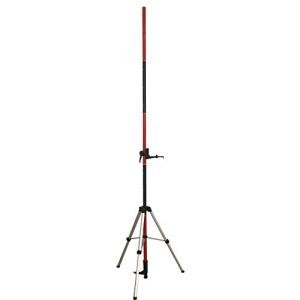
Siting is everything. The World Meteorological Organization specifies that wind sensors should be mounted at 10 metres above ground in open terrain, away from trees, buildings, or anything else that disturbs airflow. Consumer stations often compromise on this — a wind sensor on a 2-metre garden pole surrounded by hedges will underread significantly.
The Rain Gauge
The tipping bucket rain gauge is the standard. A funnel channels precipitation into a small see-saw mechanism. Each time one side fills (typically 0.2mm of rainfall), it tips, draining that side and counting one increment. The number of tips over time gives you rainfall rate and accumulation.
Tipping bucket gauges have a known limitation: in very heavy rain, some precipitation falls during the tip itself and isn't counted. High-end gauges compensate for this algorithmically. They also have problems with snow, sleet, and freezing rain, which is why some stations include a heated collection funnel.
The Pyranometer — Solar Radiation
Not every consumer station includes it, but solar radiation measurement is increasingly common. A pyranometer measures incoming shortwave radiation from the sun in watts per square metre. This data is useful for solar panel efficiency monitoring, agriculture (calculating evapotranspiration), and computing UV index.
The Personal Weather Station Revolution
Something genuinely interesting happened around 2010. Consumer electronics manufacturing got cheap enough that a capable home weather station fell below the psychological £100 barrier. At the same time, the internet made it trivially easy for those stations to upload data automatically to shared networks.
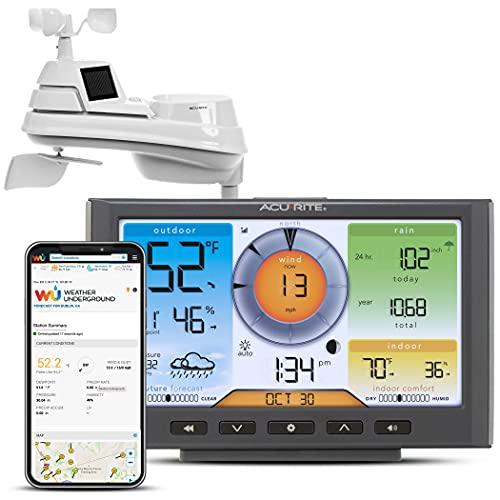
Networks like Weather Underground, CWOP (Citizen Weather Observer Program), and the UK's Weather Observations Website suddenly had tens of thousands of volunteer stations feeding real-time data. Meteorologists initially dismissed this data as noisy and unreliable — and some of it was. But the density was extraordinary. A national met service might have one official station per 500 square kilometres. A city covered by personal weather stations might have dozens per square kilometre.
Researchers began developing quality control algorithms to filter out the bad observations, and what emerged was genuinely useful hyper-local data. Urban heat island mapping, microclimate research, flash flood monitoring in cities — all of these applications became possible because a retired teacher in Birmingham decided to put a weather station in her garden and share the data.
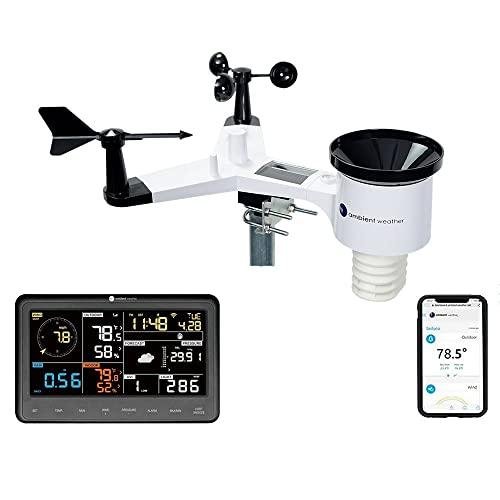
Brands like Davis Instruments, Ambient Weather, Ecowitt, and Netatmo built ecosystems around this community data model. Some of their better stations upload to multiple public networks simultaneously, feeding both citizen science databases and professional forecast systems.
Siting Your Weather Station — The Rules Nobody Reads
The single biggest factor in data quality isn't the sensor — it's placement. The World Meteorological Organisation publishes detailed siting criteria, and while most garden installations can't meet the full standard, understanding the principles helps you minimise error.
Temperature sensors should be in open ground, away from walls, roads, and vegetation. Ideally north-facing (in the Northern Hemisphere) to minimise solar heating effects on the enclosure. The standard measurement height is 1.25–2 metres above ground.
Rain gauges are particularly sensitive to placement. A gauge near a tree will catch drips and leaf-melt long after rain has stopped, inflating totals. A gauge near a building experiences wind eddies that reduce catch — studies show that wind alone can cause gauges to under-record rainfall by 10–30%.
Wind sensors need height and exposure above anything that creates turbulence. The closer your sensor is to buildings or trees, the more your readings will reflect local eddies rather than the free airstream.
Weather Stations for Specific Purposes
Not everyone needs a general-purpose station. There are strong arguments for purpose-specific setups depending on what you're actually trying to do.
Agricultural Weather Monitoring
Farmers and growers have always needed weather data, but the precision requirements are different from a general forecast. Leaf wetness sensors, soil temperature probes, and evapotranspiration calculations (which require solar radiation, temperature, humidity, and wind data together) are the priority. Several specialist suppliers, including Davis and Campbell Scientific, produce stations specifically designed for agricultural use, with data outputs formatted for irrigation scheduling software.
Aviation Weather Observation
Every airfield needs, at minimum, a wind sensor, barometer, temperature/dewpoint sensor, and visibility measurement. Automated weather observation systems (AWOS) at smaller aerodromes are weather stations with regulatory certifications. They must meet specific accuracy and reliability standards because an incorrect reading can be a safety issue. They're calibrated regularly, have redundant power supplies, and report in coded formats like METAR that pilots and air traffic control can read universally.
Building and HVAC Management
Buildings consume enormous amounts of energy regulating temperature, and external weather conditions are a primary driver of that load. Integrating a weather station into a building management system allows smarter HVAC control — pre-cooling before a heat wave, reducing heating output as sun warms south-facing spaces, adjusting ventilation based on external humidity. Several manufacturers produce stations specifically designed with BACnet or Modbus outputs for building integration.
Research and Education
School and university weather stations serve a dual purpose: real data collection and engaging teaching tools. Several networks exist specifically to support educational weather stations — the Met Office's Weather Observation Website in the UK, and the GLOBE Programme internationally, both provide frameworks for schools to contribute standardised data. The best educational stations are ones students can interact with directly, recalibrate, and troubleshoot.
The Data Side — Getting More From Your Observations
A weather station that only displays current conditions on a console screen is leaving most of its value on the table. The real power comes from historical data, trends, and integration.
Most modern stations include software or a cloud portal that logs data and presents it graphically. The better platforms let you export raw data in CSV format, which means you can do your own analysis — tracking temperature trends over years, correlating rainfall with wind direction, or feeding your data into a home automation system.
Several open-source software packages exist for weather hobbyists. WeeWX, for example, is a Python-based weather station software that runs on a Raspberry Pi, supports hundreds of station models, and can generate NOAA-style climate summaries automatically. It also uploads to every major weather network simultaneously with minimal configuration.
If you're technically inclined, MQTT integration is worth exploring. Many professional and semi-professional stations can publish sensor readings to an MQTT broker in real time, from which they can flow into Node-RED automations, InfluxDB time-series databases, or Grafana dashboards. The result is a genuinely impressive local weather monitoring system for a fraction of the cost of commercial solutions.
Connected Stations and the Internet of Things
Weather stations were among the earliest IoT success stories, simply because the application was so clean: sensor reads value, value uploads to internet, internet displays value on phone. There was no complicated interaction model to design.
The next phase is more interesting. Modern stations are beginning to integrate with smart home systems — triggering garden irrigation only when no rain is forecast, adjusting motorised blinds based on solar radiation, alerting you to close windows when humidity spikes. Ecowitt and Ambient Weather both have native Home Assistant integrations. Davis produces a station with full API access. Netatmo works within Apple's HomeKit ecosystem.
The logical endpoint is a home that responds intelligently to the outdoor environment using real measured conditions rather than generic forecasts. A forecast tells you it might rain somewhere in your postcode. Your garden weather station tells you whether it actually rained, and how much.
What the Future of Weather Stations Looks Like
The most significant shift happening right now is the democratisation of upper-air observation. Traditionally, upper-air data — wind speed and direction at altitude, temperature profiles through the troposphere — required radiosonde balloon flights, which are expensive and time-limited. Weather stations were strictly surface instruments.
Several developments are changing this. Miniaturised pressure and temperature sensors now fly on commercial aircraft as part of programmes like AMDAR (Aircraft Meteorological Data Relay), essentially turning every flight into a temporary weather station. More dramatically, companies are beginning to deploy networks of small fixed sensors that use GPS signal bending — the way GPS signals refract as they pass through the atmosphere — to derive temperature and humidity profiles without any moving parts.
At the consumer end, the integration of AI-driven quality control means that even modest garden stations can now have their data corrected and validated automatically before contributing to forecast models. What was once noisy, suspect data from a hobbyist's garden is increasingly being treated as a legitimate observation.
Drone-based weather sensing is another emerging area. Fixed-wing drones can fly systematic transects, sampling atmospheric conditions through a vertical column in ways no surface station can replicate. This is particularly valuable for understanding the boundary layer — the lowest few kilometres of the atmosphere where most weather that affects us actually lives.
Choosing Your First Weather Station — Honest Advice
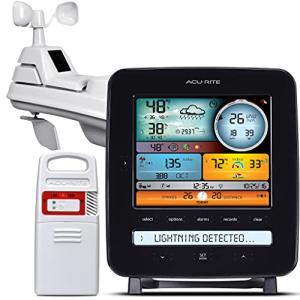
If you're buying your first weather station, resist the temptation to over-specify. The gap between a $120 Ecowitt HP2550 and a $500 Davis Vantage Pro 2 is real, but it matters much less than whether you site the station properly. Buy a sensible mid-range station, spend time getting the placement right, and contribute your data to a public network. That's where the value lies.
If you're buying for a professional or agricultural application, talk to a specialist before purchasing. The sensor specifications matter less than support, calibration services, data connectivity standards, and long-term parts availability. A station you can't maintain accurately in five years is worse than a station you could have bought for less.
And if you're buying because you're genuinely passionate about weather — because you want to understand what the atmosphere is doing at your specific location, in your specific microclimate, over years and decades — then welcome. You're joining a tradition that stretches back to those Medici observers in 17th-century Florence, and your data matters more than you know.
Whether you're a curious homeowner, a farmer dependent on accurate rainfall data, or a researcher pushing the boundaries of atmospheric science, there has never been a better time to start observing. The tools are affordable, the networks are global, and the atmosphere — endlessly variable, endlessly surprising — is always giving you something worth measuring.